Tuesday, September 16, 2014

Why Dogs Bark and Growl

Does your dog growl or bark when a stranger approaches your house or when something goes bump in the night? If so, you’re not alone.


 Most dogs will vocalize when they are exposed to new or different situations, including strange people or animals entering their territory; being separated from their pack, mother or even your family members; or new or alarming sounds. Dogs may also bark or growl when they see prey, such as squirrels, and they may bark for attention, food or if they are anxious. Dogs often growl when they are fearful or trying to assert themselves in a situation. If the dog’s fear or assertiveness is alleviated by growling or barking, the dog will learn that his behavior is acceptable and the behavior may become more frequent or severe. Some medical problems may cause growling or barking and older pets experiencing senile changes may have barking problems. Intense and continuous barking may be considered compulsive. Check with your veterinarian to evaluate your pet’s barking or growling problem. Behavior training and drug therapy may be helpful in reducing barking for pets with medical, geriatric and compulsive disorders.


 Socializing your puppy can help
Acclimate your puppy to a variety of different people, environments, situations and noises to help lessen anxiety as your puppy grows. Make sure your puppy spends time alone so that he doesn’t develop separation anxiety while you are away from him. Proper training is essential to preventing behavior problems, such as growling and barking. Ask you veterinarian for more information about puppy training.


Correcting a barking or growling problem 
Correcting a barking or growling problem first requires that you have effective management of your dog. Once you have achieved this, you can begin to train your dog to lessen his barking or growling behavior by using rewards for quiet behavior. The reward should be something that the dog really likes such as a favorite treat, tummy rubs, or a favorite toy. Punishment is generally ineffective in correcting barking problems. Too much punishment may even exacerbate the behavior and cause the dog to be fearful or aggressive.

 Begin your training with situations that you can easily control (such as a family member making a noise that causes the dog to bark) before moving on to difficult situations (such as a strange animal in your yard). When your dog barks at the stimuli (for instance, a doorbell ring), immediately interrupt the barking. When the dog is quiet offer the dog a reward for their behavior. Without the reward there is no incentive to remain quiet.Reward your dog when, at your request, he has stopped barking. Only reward the dog when he is quiet and gradually increase the amount of time that the dog needs to be quiet for him to receive a reward.

 As the barking or growling problem decreases, make sure to direct your dog to more appropriate behavior, such as play, and the problem should lessen over time. Don't forget to discuss training options with your veterinarian to find the one that will work best for your pet.


 Source: http://www.aaha.org/pet_owner/pet_health_library/dog_care/behavior/barking_and_growling.aspx

Tuesday, August 19, 2014

Back to School Separation Anxiety

With all the excitement of the kids going back to school, many families may not think about what it means to the dog or cat. What you may notice are changes in behavior, a sad dog or cat, who mopes around or sleeps a lot more. Or your dog may suddenly started chewing things he shouldn't, or your cat does a lot more meowing. And you may not even connect the unusual cat or dog behavior with back-to-school time. Dogs and cats love routine, it makes them feel secure. They like knowing that certain things happen at about the same time each day, and they know where they want to be when it happens. If the kids have been around all summer, playing outside with the dog, or giving kitty extra love and snuggles, and suddenly they’re gone all day, it's upsetting. For some pets, they just feel sad and confused, and others feel real separation anxiety and may act up. 


 Kids can help your pet through the back-to-school blues The first thing to note is that this is a family matter, and a good opportunity for the kids to take more responsibility for the care of their pets. Let your kids know that their dog or cat is going to miss them when they're gone all day, and discuss what they can do to help their pets through it. One of the best ways for a pet to get over the loss of one routine is to replace it with another. Your pet may be sad all day at first, but if he knows that at 3:45 your kids will be home from school and will actively play with him soon after each day, your pet has something new to look forward to. If your child has a set time to do homework or read, that's an excellent time for the dog or cat to curl up next to her and "help" with studying. Ask your kids to think of other ways to include their pets in their routines. 


More than just sad, it’s separation anxiety If your pet exhibits true separation anxiety, as in, he goes crazy when he sees your kids put on their backpacks to leave for school, or is destructive when everyone is gone, you'll have to do some gentle training to ease his stress. Your kids may feel sorry for their pet and do a long sad goodbye. This only reinforces your pet’s fears and builds up the anxiety. It’s better to make the goodbye upbeat and brief, or eliminate it completely. Depending on your pet, he may respond well to a goodbye petting, a little goodbye treat, or simply leaving with a cheerful "good boy!" as your kids go out the door. This should happen before your pet gets upset. If your pet is freaking out, absolutely do not reward with anything. If you can't get your pet to calm down if it’s a dog, a simple "sit!" command may help. Then reward with petting and telling him he's ok once he’s calm. If your pet gets upset just by the backpacks or car keys being picked up, pick those items up and walk around the house with them several times a day, but don't leave. Your pet will learn not to associate those items with the pending doom of your kids leaving.


When back-to-school means an empty house If everyone is gone all day, both parents included, your pets are going to be bored on top of being upset. It's important to leave them some interactive toys to help them pass the time. Eventually, they will get used to the new reality, and will likely sleep most of the day. You can balance the boredom by providing vigorous exercise each day when you or your kids are home. Remember, you and your kids may have had a very busy day, but your pet has done virtually nothing, unless there is evidence to the contrary, as in a shredded or chewed up sofa. Providing your dog or cat active, vigorous play each day will help them burn up their pent up energy. Take your dog for a run or go outside and throw a ball or flying disk. For your cat, run around the house with a little toy on the end of a string. You may also want to consider getting your pet a little buddy to keep him company when no one is home. Even an aloof adult cat is likely to accept a kitten into her life, and the kitten will entice the older cat to play. And dogs, being true social animals, nearly always accept another dog to play with. Remember, your pets can get nervous, upset, anxious or lonely just like people, only they don't have the benefit of knowing that you’ll be back when you leave. It's up to you and your kids to make your pets feel secure in ways they understand. 


Source: http://www.petcentric.com/08-24-2009/your-pets-view-of-kids-going-back-to-school


Thursday, July 24, 2014

AAHA Accreditation


Unlike human hospitals, animal hospitals are not required to be accredited. Veterinary hospitals are evaluated on approximately 900 standards of veterinary excellence in order to become accredited. AAHA-accredited hospitals are recognized among the finest in the industry, and are consistently at the forefront of advanced veterinary medicine. Their Standards of Accreditation are continuously reviewed and updated to keep accredited practices on the cutting edge of veterinary excellence. Their standards address patient care and pain management, surgery, pharmacy, laboratory, exam facilities, medical records, cleanliness, emergency services, dental care, diagnostic imaging, anesthesiology, and continuing education. To maintain accredited status, we undergo comprehensive on-site evaluations every three years.


 What does accreditation mean? It means that we hold ourselves to a higher standard, and that your pet is receiving care at a hospital that has passed the highest standards in veterinary care.


 We are very proud to offer the best veterinary care for your pet and hope that you are proud to say that you take your pet to an AAHA accredited animal hospital!

Still have questions about what AAHA means for you and your pet? Leave a comment below!


Source: http://www.aaha.org/pet_owner/about_aaha/why_accreditation_matters/about_accreditation/default.aspx


Tuesday, June 17, 2014

Hot Weather Tips to Help Your Pet Stay Cool This Summer

Summer means enjoying the weather, and for most, with your pet! Remember to keep your pet healthy this summer by keeping them safe in the summer’s high temperatures.


Here are just some of the ways you can help ensure your pets have a safe summer:

 Visit the Vet. A visit to the veterinarian for a spring or early summer check-up is a must. Make sure your pet is up-to-date on all necessary vaccinations. Pets should also be given a blood test for heartworm every year in the early spring. The deadly parasite is transmitted through the bite of an infected mosquito, and it is recommended that dogs and cats be on a monthly preventive medication year-round.

 Keep Cool. Dogs and cats can become dehydrated quickly, so give your pets plenty of water when it is hot outdoors. Also make sure your pet has a shady place to escape the sun, and when the temperature is very high, don't let your dog linger on hot asphalt.

 Know the Symptoms. Some symptoms of overheating in pets include excessive panting or difficulty breathing, increased heart and respiratory rate, drooling, mild weakness, seizures, and an elevated body temperature of over 104 degrees. Summertime is the perfect time for a backyard barbeque or party, but remember to keep alcoholic beverages away from pets, as they can cause intoxication, depression, comas, or even death. Similarly, remember that the snacks you serve your friends should not be a treat for your pet; any change of diet, even for one meal, may give your dog or cat severe digestive ailments.” Avoid raisins, grapes, onions, chocolate and products with the sweetener xylitol.

 Water Safety is Pet-friendly. Do not leave pets unsupervised around a pool, as not all dogs are good swimmers. Introduce your pets to water gradually and make sure pets wear flotation devices while on boats. Rinse your dog off after swimming to remove chlorine or salt from his fur, and try to keep your dog from drinking pool water, which contains chlorine and other chemicals that could cause stomach upset.

 Source: http://www.aspca.org/about-us/press-releases/aspca-offers-hot-weather-safety-tips-help-pets-beat-heat-during-dog-and-cat

Thursday, May 15, 2014

Pet Safety Tips for Memorial Day

Like many Americans, you may be planning a festive Memorial Day, complete with barbecue and fireworks. It’s important to remember, fireworks and dogs don't mix.


Unlike people, dogs won’t associate the noise, flashes, and burning smell of pyrotechnics with a celebration. Fireworks will often cause panic and anxiety in dogs. It’s important to remember that dogs panic at the sound of fireworks and flee into the night, often winding up lost, injured, or killed.
Here are a few tips to help keep your pet safe this Memorial Day.
1.    Keep your pet indoors at all times, if possible.
2.    Use Pet Friendly Repellent.
3.    Don’t give your pet table food.


Wednesday, April 16, 2014

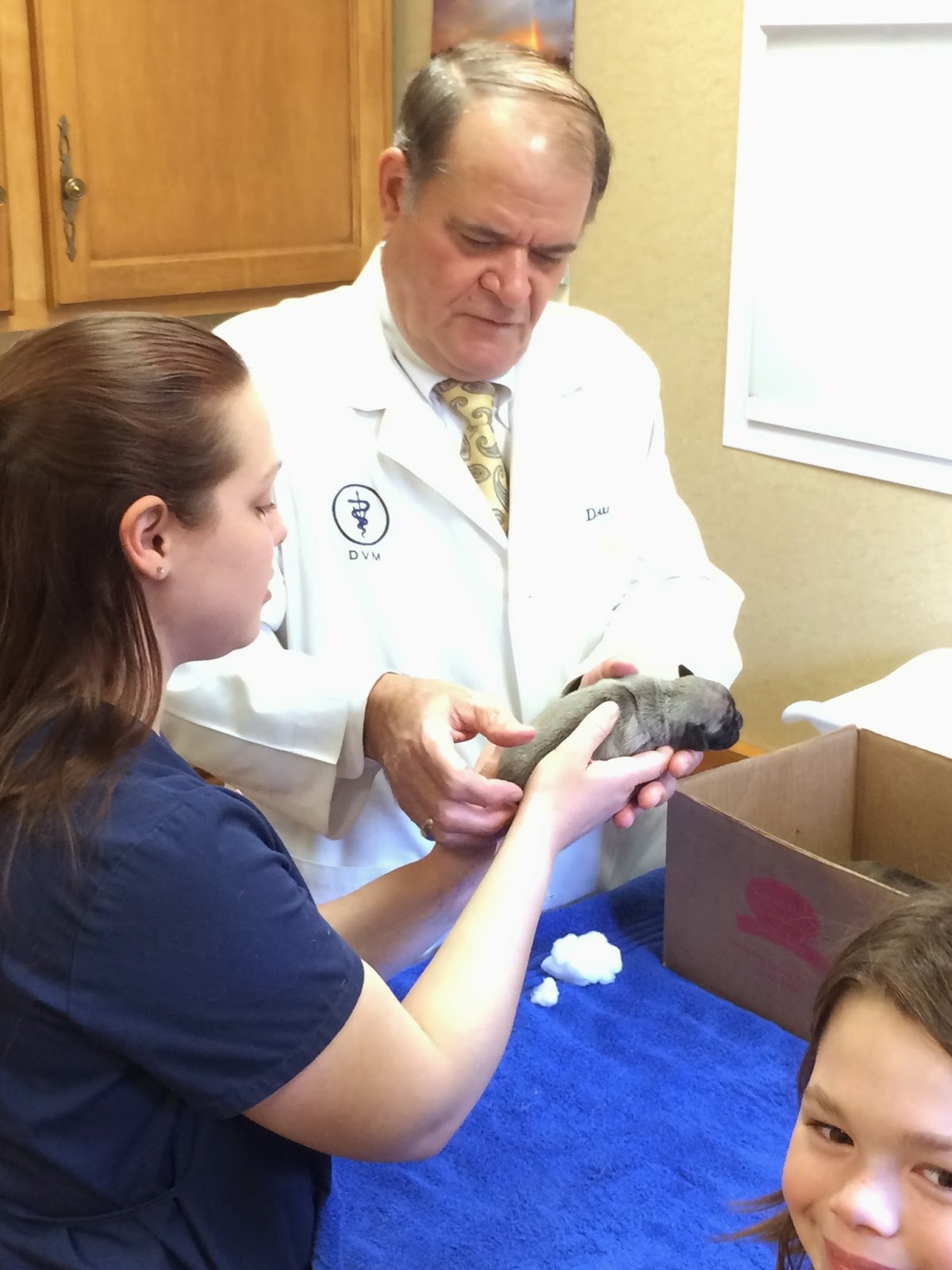
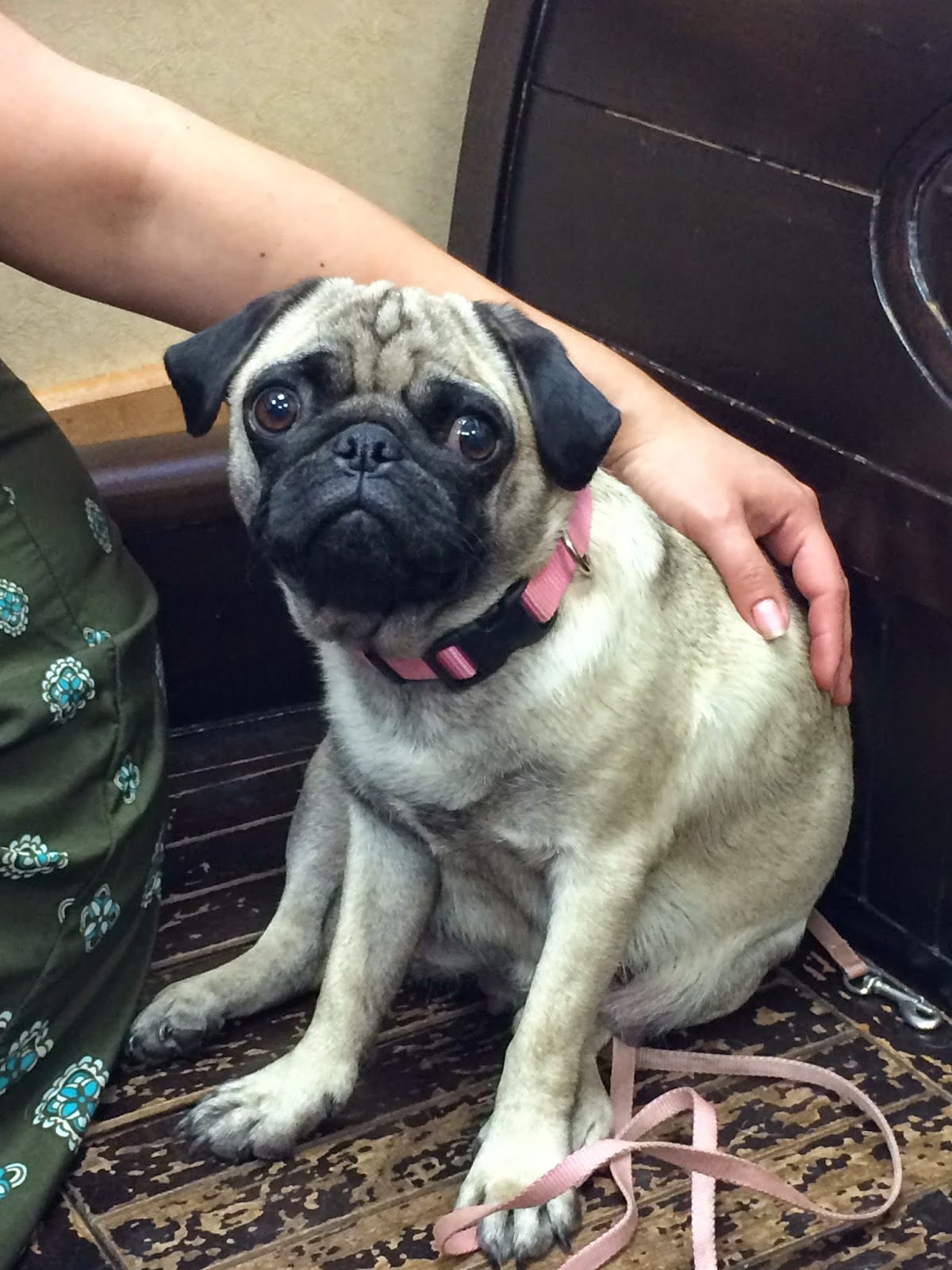
Pookie's Puppies

Pookie is a two year old Pug who visited us at Companion Pet Hospital of Fishkill with her five male puppies. Dr. Ouart examined the puppies along with Lauren, Mellisa, and our Technician Assistant Natalee (Kathy's daughter).


Tuesday, April 8, 2014

April is National Heartworm Awareness Month!

April is National Heartworm Awareness Month! Did you know that heartworm disease is one of the most deadly diseases in pets? It is 100% preventable so call us today and ask about your pet’s heartworm prevention.

Friday, April 4, 2014

Top 10 Green Pet Tips


  1. Adopt from a shelter
    Why buy when you can adopt one of the 70,000 puppies and kittens born every day in the United States?

  1. Spay or neuter your pet
    Spaying and neutering helps dogs and cats live longer, healthier lives by eliminating the possibility of uterine, ovarian, and testicular cancer and decreasing the incidence of prostate disease.

  1. Rein in your pets; protect native wildlife
    Always keep your dog on a leash when outside and confine your mangy feline indoors.

  1. Swap out the junk food
    Most conventional pet-food brands you find at the supermarket consist of reconstituted animal by-products, otherwise known as low-grade wastes from the beef and poultry industries. Natural and organic pet foods use meats that are raised in sustainable, humane ways without added drugs or hormones, minimally processed, and preserved with natural substances, such as vitamins C and E.

  1. Clean up their poop
    Scoop up your doggie doo in biodegradable poop bags so your buddy's No. 2 isn't immortalized in a plastic bag while deep-sixed in a landfill somewhere for hundreds of years. Cat owners should avoid clumping clay litter at all costs. Not only is clay strip-mined (bad for the planet), but the clay sediment is also permeated with carcinogenic silica dust that can coat little kitty lungs (bad for the cat).

  1. Give them sustainable goods Your furry friends can get in on some saving-the-planet goodness, too--and have plenty of fun--with toys made from recycled materials or sustainable fibers (sans herbicides or pesticides) such as hemp.

  1. Use natural pet-care and cleaning products
    You don't use toxic-chemical-laced
    shampoos and beauty products, so lather up your cats and dogs (or ferrets, rabbits, or hamsters--we don't judge) with natural pet-care products, as well. And if your cat horks up a hairball, or Fifi doesn't make it all the way to the bathroom, clean up the mess with cleaning products that are as gentle on the planet as they are on your critters' delicate senses.

  1. Tag your pet
    It might be a stretch to call inserting an electronic ID chip into your pet an eco-friendly move, but losing your buddy causes extreme emotional distress that turns you into nobody's friend. Then there's the paper waste from printing out Missing posters, the fuel cost of driving around your neighborhood trying to find them, the phone bill as you bawl your eyes out to everyone you know ... well, you get the idea. Ask us for more info.
  2. Compost their poopAmerican dogs and cats create 10 million tons of waste a year, and no one knows where it's going, according to Will Brinton, a scientist in Mount Vernon, Maine, and one of the world's leading authorities on waste reduction and composting.

  1. Get crafty
    Your cat will love you forever if you grow your own organic catnip or cat grass. Scrap yarn and fabric you might otherwise toss can also easily be transformed into pet toys with some basic crafty know-how. And they wouldn't have had to be trucked thousands of miles just to get drooled on.


Tuesday, February 4, 2014

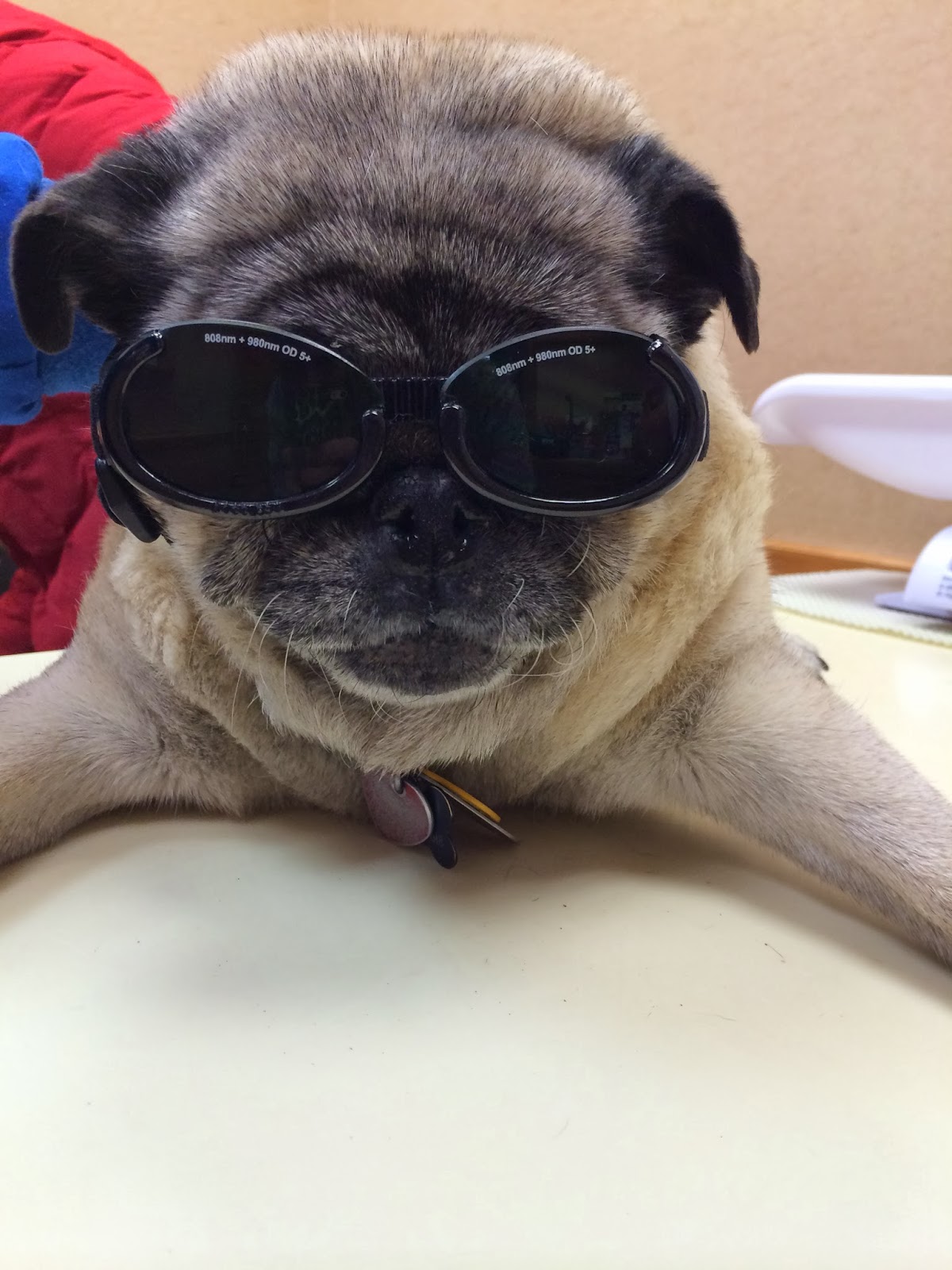
Laser Therapy: Micki

Here is Micki an 11 year old pug wearing her "doggles" right before she received laser light therapy. 

The beneficial effects of laser light on tissue were first recognized almost forty years ago. Since then, there have been thousands of studies documenting the positive effects laser light has on different types of cells, tissue, and disorders.  Recent advances in technology and manufacturing have made it possible to have this exciting modality available and affordable for clinicians.


The laser light is delivered through a non-invasive handpiece to treat the affected area. Your pet will feel a gentle and soothing warmth. As the laser is administered, many pets will relax, much like you would experiencing a good massage. The almost immediate relief of pain will allow your pet to be comfortable and any anxiety that your pet initially experienced will dissipate.


Simply put, it provides relief. The fur does not need to be clipped. Eye protection will be worn by the laser operator and anyone in a close proximity to the laser probe.  The eyes of the animal will be directed away from the treatment area or covered with a towel or eye wear.  The clinician will move the probe over the area of treatment to assure the laser is being delivered to the area which needs improvement.  There are no known side effects with this treatment.

Thursday, December 12, 2013

Christmas Safety


“My pet would never eat food off the table!”

“My pet would never knock over the Christmas tree!”

“My pet would never bite someone!”

We all know our pets pretty well, but what we don’t always realize is that stress can make anybody do crazy things! When you have holiday guests or flashing Christmas lights or loud holiday music—or all of the above—at your house all at once, your pet may get stressed and frustrated, causing them to act out in unexpected ways. Most pet accidents are met with the statement, “He’s never done anything like that before!”

We recommend always making sure that your pet has a safe place to sit and relax during your holidays parties. Just like some people, pets need to get away from the action and de-stress, but most of the time they don’t know how to ask for their space. If your pet is comfortable in their crate, we recommend moving it into a quiet room and letting them spend some time resting during your holiday get-togethers. Your pet will be happier, and by extension, you and your guests will be happier! And holidays disasters will be prevented.  


Tuesday, November 5, 2013

It’s Adopt A Senior Pet Month!

Senior pets need love just as much as young and spry pets do. Have you ever adopted a senior pet and how has it changed your life?

Tuesday, September 17, 2013

Pet Diabetes


What is diabetes?

Diabetes mellitus, the medical name for diabetes, is a disease caused by a lack of insulin, or the inability of the body to utilize the insulin properly, that affects the level of glucose, or sugar, in your dog or cat’s blood. The glucose comes from the food that your pet eats. The food is broken down into very small components by the pet’s digestive system so their bodies can use it for energy. Glucose is one of these components, and an important source of energy.
Glucose is absorbed from the intestines into the bloodstream where it travels to cells throughout the body. Insulin is required for the cells to absorb glucose. Insulin is produced by the pancreas in response to the amount of glucose in the bloodstream. Healthy pets produce insulin easily, but pets with diabetes don’t. In canine and feline diabetes, unused glucose builds up in the bloodstream.

Is diabetes in my pet the same as diabetes in people?

The two conditions are very similar. In fact, your veterinarian will be using medication, equipment, and monitoring systems that are similar to those used for diabetic people.

How common is diabetes in dogs and cats?

Diabetes usually affects less than 1% of dogs and cats. But experts believe that it is on the rise.

Can diabetes lead to other health problems?

Yes. Dogs and cats with diabetes can develop other health problems, usually after living with diabetes for a year or more. For dogs, a common complication of diabetes is cataract formation. Persistently high blood glucose levels can make the lens of the eye opaque, causing blindness. For cats, weakness of the hind legs is a common complication. Persistently high blood glucose levels may damage nerves, causing weakness and muscle wasting. For both dogs and cats, controlling high blood glucose levels can lead to healthier outcomes. For this reason, early diagnosis of diabetes in your dog or cat is important.

Will diabetes affect my dog or cat’s life expectancy?

Today, with effective treatment and monitoring, a diabetic dog or cat should have the same life expectancy as a non-diabetic dog or cat of the same age. Early diagnosis and appropriate treatment helps diabetic pets maintain a good quality of life.

Is my dog or cat at risk for diabetes?

While diabetes has been diagnosed in dogs and cats of all ages, genders, and breeds, certain pets are at greater risk for the disease.

Risk factors in dogs

  • Age (middle-aged to older dogs are more affected)
  • Unspayed females
  • Genetics
  • Obesity

Breed—these breeds have a higher risk for developing diabetes:

  • Cocker Spaniels
  • Dachshunds
  • Doberman Pinschers
  • German Shepherds
  • Golden Retrievers
  • Labrador Retrievers
  • Pomeranians
  • Terriers
  • Toy Poodles

Risk factors in cats

  • Age (older cats are more susceptible)
  • Neutered males
  • Genetics
  • Other insulin-resistant disorders or diseases, such as chronic pancreatitis (inflammation of the pancreas) or hyperthyroidism (overproduction of thyroid hormones)
  • Obesity
  • Physical inactivity
  • Indoor lifestyle

Are there warning signs I should be aware of?

Some common signs of diabetes in dogs and cats include:
  • Excessive thirst
  • Excessive urination—your pet produces more urine per day or has “accidents” in the house (dogs) or outside the litterbox (cats)
  • Excessive hunger while losing weight
  • Lethargy (less active/sleeps more)
  • Cloudy eyes (dogs)
  • Doesn’t groom (cats)
  • Thinning, dry, and dull hair

How will my veterinarian test my pet for diabetes?

Your veterinarian may begin by performing a general health examination and asking questions about any signs your pet may be displaying. Then, a sample of your pet’s urine will be tested for the presence of glucose (a type of sugar) or ketones (acids produced by the body as it breaks down fat instead of glucose for energy). If glucose is present in your pet’s urine, your veterinarian will then test your pet’s blood to determine the blood glucose level. A diabetes diagnosis is considered definite when persistently high glucose levels are found in both the blood and urine.

How do I take care of a pet with diabetes?

Although there is no cure for diabetes, the disease can be successfully managed with the help of your veterinarian. Daily insulin injections are usually required to restore a pet’s insulin level and control blood glucose levels. Many owners are anxious about giving injections, but it’s easier than you think, and you can quickly learn how to handle the dosing routine with little stress for you or your pet. Diet plays a vital role in helping to keep your pet’s diabetes regulated.
Your veterinarian can recommend a diet that’s best suited to the needs of your pet. A high-quality, consistent source of protein is an essential part of any diabetic diet. High-protein, low-carbohydrate foods are currently recommended for diabetic cats because they provide the extra energy cats need to get through their active days, without the extra carbs that can turn into excess sugar. It is important to feed your pet based on its ideal body weight.
Consistent timing and size of meals is also very important. Exercise can help dogs with diabetes, but it needs to be regulated because activity affects blood glucose levels. It’s best to create a consistent exercise routine for your diabetic dog and stick to it. (There is no clear recommendation for exercise in diabetic cats because their activity is difficult to regulate.) Regular veterinary checkups can help identify changes in your pet’s condition and help you to manage this disease successfully over time.
Managing your dog or cat’s diabetes will require some effort, but the rewards are well worth it. Pets whose diabetes is under control have normal thirst, appetite, urination, and activity levels. Their weight is generally stable and they are less likely to develop complications.

Where can I learn more about diabetes in dogs and cats?

The following websites provide useful information:


Originally posted on Healthy Pet.

Tuesday, August 13, 2013

Make Sure They Can Get Home: Check Your Pet's Microchip

Is your pet's microchip up-to-date? If your pet were lost, would an animal hospital or shelter be able to contact you once your pet was found?


It's important to get your pet microchipped; but it's just as important to make sure that microchip contains the correct information in order for your four-legged friend to get home.
That's why the American Animal Hospital Association (AAHA) and the American Veterinary Medical Association (AVMA) are teaming up to encourage pet owners to update their pet's microchip information on National Check the Chip Day, Aug. 15.
Almost 9.6 million pets are euthanized every year because their owners can't be found, according to the American Humane Association. While tags and collars are important, microchipping is a valuable method because the microchip won't wear out, tear, slip off or become lost.
How does a microchip work?
The microchip, which is about the size of a grain of rice, is injected by a veterinarian or veterinary technician just beneath your pet's skin in the area between the shoulder blades. This is usually done without anesthesia, and the experience can be compared to getting a vaccination.
Each microchip has a unique registration number that is entered into a database or registry, and is associated with your name and contact information. If your lost dog or cat is found by an animal hospital, shelter or humane society, they will use a microchip scanner to read the number and contact the registry to get your information.
Make sure you can be found, too
While it may be comforting to know the microchip won't get lost or damaged, and that it will probably last the pet's lifetime, the microchip is useless if you're not updating your contact information with the registry. If your pet has been microchipped, keep the documentation paperwork so you can find the contact information for the registry. If you don't have the documentation paperwork, contact the veterinarian or shelter where the chip was implanted.
Keep in mind there are more than a dozen companies that maintain databases of chip ID numbers in the U.S. By using AAHA's Universal Pet Microchip Lookup at petmicrochiplookup.org, you can locate the registry for your chip by entering the microchip ID number. If you don't have your pet's microchip ID number, have a veterinarian scan it and give it to you.
Only about 17% of lost dogs and 2% of lost cats ever find their way back to their owners. Prevent the heartache and ensure your pet has an up-to-date microchip.


Originally published by Healthy Pet.

Friday, July 19, 2013

Ack—My Pet Ate Garbage!

Ack—My Pet Ate Garbage!


Why worry? Because people food is not safe for animals. And food isn’t the only risk—animals will eat the most unexpected things. It’s important to guard that garbage can.

“You don’t want your dog to pig out on chocolate or leftover pizza, chicken or turkey—anything with a high percentage of fat can lead to pancreatitis (inflammation and swelling of the pancreas, which can cause permanent damage and be fatal)," says Martha Gearhart, DVM, owner of Pleasant Valley Animal Hospital, Pleasant Valley, N.Y. “Raw bones are digestible, but their sharp points are dangerous, and cooked bones are very brittle and can shatter [once eaten].”

The odor of food or blood attracts animals to garbage, sometimes with tragic results—Gearhart’s brother’s dog ate the plastic wrap and Styrofoam tray from a package of meat, killing the dog. “It didn’t show up in the X-ray, but the points from the Styrofoam punctured the lung,” she recalls.
Boredom and separation anxiety can make animals explore trash cans or pounce on decorations, Gearhart says. “Some dogs have a passion for salty, smelly socks!” she notes. “I had one dog that enjoyed knocking down glass ornaments and biting on decorative balls.”

Cats eating tinsel is so common that tinselitis is a veterinary term. “Cats won’t eat tinsel from the garbage can, but will be attracted to tinsel on a tree,” warns Gearhart.
I discovered that myself—my own cat once ate tinsel. I found out when she eliminated it, tangled in balls of poop that she dragged around the apartment. I was lucky to get her to the veterinarian in time for treatment.

Dogs may eat used tampons or sanitary pads, which cause dangerous internal obstructions, Gearhart says.
There is string in a roast or bird, and string is severely dangerous—it causes internal damage. Cats are more likely to eat string than are dogs, notes Gearhart.

Prevention First
Prevention is the best way to protect animals from garbage:
  • Rinse wrappers, containers and packaging before pitching them.
  • Lock garbage under the sink or on the porch.
  • Use trash cans with tight-fitting lids (heavy, self-closing cans for households with large dogs).
  • Move garbage from indoors to well-secured outdoor containers.
  • Put tinsel and breakable decorations high up, out of reach.
  • Put a decorated tree in a room with a door—and keep it closed.
  • Keep dogs away from dangerous and tempting situations.
As Gearhart notes, “I’m all for crate training. They feel better and more secure.”

Protective Measures
If precautions fail, the best thing to do is call your veterinarian, who might have you come in to get a vomit-inducing drug. Or, they may encourage you to induce vomiting, unless the animal ate something sharp, acidic or caustic.

In some instances, your veterinarian might have you wait—it can take up to 5 days for elimination. Regardless, work with your veterinarian to find the best “cure” for your pet.
Here’s to a safe diet, and holiday season, for your animals!
Readers: Tell us what your pet has gotten into by e-mailing the editor at ann.everhart@aahanet.org.


Originally published by AAHA.

Tuesday, July 9, 2013

Dog House Repairs Month

Does your dog have a dog house? It's Dog House Repairs Month! Make sure their house is not made of pressure treated wood if they are a puppy or a chewer! Pressure treated wood is treated with arsenic and is poisonous to pets if consumed!

Monday, June 3, 2013

Pet Preparedness Month

Do you have a preparedness kit for your pet, in case of an emergency? We recommend including food, water, leash and collar, bowls, pet ID, medications, immunization records, pet carrier, first aid kit, and a contact list for all pet emergency contacts.

Friday, May 24, 2013

Memorial Day


Monday is Memorial Day, a time to remember the men and women who dedicated their lives to our nation’s freedom.

Wednesday, February 13, 2013

Pets a Go Go: Tips for Traveling with Fido and Fluffy


Traveling with your pet can be a rewarding experience, but a successful trip depends on more than packing your pet’s favorite tennis ball or catnip toy.
To ensure the safety and happiness of your pet, start planning early, research transportation and lodging options, and make an appointment with your veterinarian.

Jet Setters

Most major airlines transport animals, but before booking a flight, consider all the factors, including your pet’s size and temperament and possible weather conditions.
Pets that are too large to fit in a pet carrier under your seat must fly as checked baggage in the plane’s cargo section.
Many animals become anxious in unfamiliar environments, particularly when separated from their owners, and can suffer both emotionally and physically during a flight.
Sedation is not considered a safe option.
"An animal’s natural ability to balance and maintain equilibrium is altered under sedation," says Patricia Olson, DVM, of the Morris Animal Foundation. "When the kennel is moved, a sedated animal may not be able to brace and prevent injury.”
Gary L. Rose, DVM, of AAHA-accredited Cabrillo Veterinary Hospital in San Diego, Calif., adds “When heavily sedated, some short-nosed breeds can have trouble breathing.”
Temperature extremes can also put your pet at risk. Many airlines do not transport pets during the hottest months of the year, or will not accept pets when the forecasted temperature is above a certain point.
Look for flights in the early morning or late evening, when temperatures are at their lowest.

On the Road

Of course there are also safety concerns when traveling by car. Pet crates are strongly recommended.
If an accident occurs, pet crates can protect animals from impact injuries and also prevent them from running out into traffic.
Marci Cook, DVM, of AAHA-accredited Shiloh Veterinary Hospital in Billings, Mont., says, “A crate offers a safe environment for your pet and helps them to feel comfortable.”
Rose recommends introducing your pet to the crate over several weeks. “Get them used to it by feeding them in it, and by taking short trips around the neighborhood to see how they do.”
For pets prone to motion sickness, Rose advises, “Make sure there’s adequate ventilation in the car. Keep [it] cool and comfortable. If your pet still shows signs of motion sickness, medication is available through your veterinarian.”

Lodging

Always research accommodations before leaving home, and make reservations whenever possible.
Many hotels and inns allow pets but may have size and weight limits, breed restrictions, or a limit on the number of pets allowed per room.
Campgrounds also have pet policies and occasionally prohibit pets altogether. State and national parks that allow pets often restrict them from certain areas, such as hiking trails and beaches.

Health Certificates

Most airlines require pets be examined by a veterinarian no more than 10 days prior to the date of travel. Be prepared to present health and rabies certificates at the time of departure.
If you are traveling by car, pack a copy of your pet’s prescriptions and vaccination records. Some states require proof of rabies vaccination.
Your veterinarian can also tell you if your pet needs additional vaccinations or preventive medications for the area in which you will be traveling.

Travel Tips and Car Safety

  • Be sure your pet is wearing a flat collar with identification tags at all times.
  • If your pet doesn’t have a microchip, consider having one implanted.
  • Know basic pet first aid, and carry a first aid kit.
  • Never allow your pet to travel with its head outside the car window.
  • Do not allow pets to ride in the front seat. They are at risk of being thrown into the windshield, can interfere with your ability to drive, or could be injured by an airbag.
  • Disable electric window controls. Dogs have have been know to get their heads stuck in windows after stepping on the buttons.
  • Stop for “potty breaks” every two hours.
  • Always leash your pet before opening the car door.

Originally published on Healthy Pet

Tuesday, February 12, 2013

February is Dog Training Education Month!

February is Dog Training Education Month! Do you have a dog that could use a little more training? Now is the time to some research to learn a little more about how your mind works and perhaps learn a few things about how you can better train your pet!