Showing posts with label NY. Show all posts

Tuesday, August 19, 2014

Back to School Separation Anxiety

With all the excitement of the kids going back to school, many families may not think about what it means to the dog or cat. What you may notice are changes in behavior, a sad dog or cat, who mopes around or sleeps a lot more. Or your dog may suddenly started chewing things he shouldn't, or your cat does a lot more meowing. And you may not even connect the unusual cat or dog behavior with back-to-school time. Dogs and cats love routine, it makes them feel secure. They like knowing that certain things happen at about the same time each day, and they know where they want to be when it happens. If the kids have been around all summer, playing outside with the dog, or giving kitty extra love and snuggles, and suddenly they’re gone all day, it's upsetting. For some pets, they just feel sad and confused, and others feel real separation anxiety and may act up. 


 Kids can help your pet through the back-to-school blues The first thing to note is that this is a family matter, and a good opportunity for the kids to take more responsibility for the care of their pets. Let your kids know that their dog or cat is going to miss them when they're gone all day, and discuss what they can do to help their pets through it. One of the best ways for a pet to get over the loss of one routine is to replace it with another. Your pet may be sad all day at first, but if he knows that at 3:45 your kids will be home from school and will actively play with him soon after each day, your pet has something new to look forward to. If your child has a set time to do homework or read, that's an excellent time for the dog or cat to curl up next to her and "help" with studying. Ask your kids to think of other ways to include their pets in their routines. 


More than just sad, it’s separation anxiety If your pet exhibits true separation anxiety, as in, he goes crazy when he sees your kids put on their backpacks to leave for school, or is destructive when everyone is gone, you'll have to do some gentle training to ease his stress. Your kids may feel sorry for their pet and do a long sad goodbye. This only reinforces your pet’s fears and builds up the anxiety. It’s better to make the goodbye upbeat and brief, or eliminate it completely. Depending on your pet, he may respond well to a goodbye petting, a little goodbye treat, or simply leaving with a cheerful "good boy!" as your kids go out the door. This should happen before your pet gets upset. If your pet is freaking out, absolutely do not reward with anything. If you can't get your pet to calm down if it’s a dog, a simple "sit!" command may help. Then reward with petting and telling him he's ok once he’s calm. If your pet gets upset just by the backpacks or car keys being picked up, pick those items up and walk around the house with them several times a day, but don't leave. Your pet will learn not to associate those items with the pending doom of your kids leaving.


When back-to-school means an empty house If everyone is gone all day, both parents included, your pets are going to be bored on top of being upset. It's important to leave them some interactive toys to help them pass the time. Eventually, they will get used to the new reality, and will likely sleep most of the day. You can balance the boredom by providing vigorous exercise each day when you or your kids are home. Remember, you and your kids may have had a very busy day, but your pet has done virtually nothing, unless there is evidence to the contrary, as in a shredded or chewed up sofa. Providing your dog or cat active, vigorous play each day will help them burn up their pent up energy. Take your dog for a run or go outside and throw a ball or flying disk. For your cat, run around the house with a little toy on the end of a string. You may also want to consider getting your pet a little buddy to keep him company when no one is home. Even an aloof adult cat is likely to accept a kitten into her life, and the kitten will entice the older cat to play. And dogs, being true social animals, nearly always accept another dog to play with. Remember, your pets can get nervous, upset, anxious or lonely just like people, only they don't have the benefit of knowing that you’ll be back when you leave. It's up to you and your kids to make your pets feel secure in ways they understand. 


Source: http://www.petcentric.com/08-24-2009/your-pets-view-of-kids-going-back-to-school


Wednesday, April 16, 2014

Pookie's Puppies

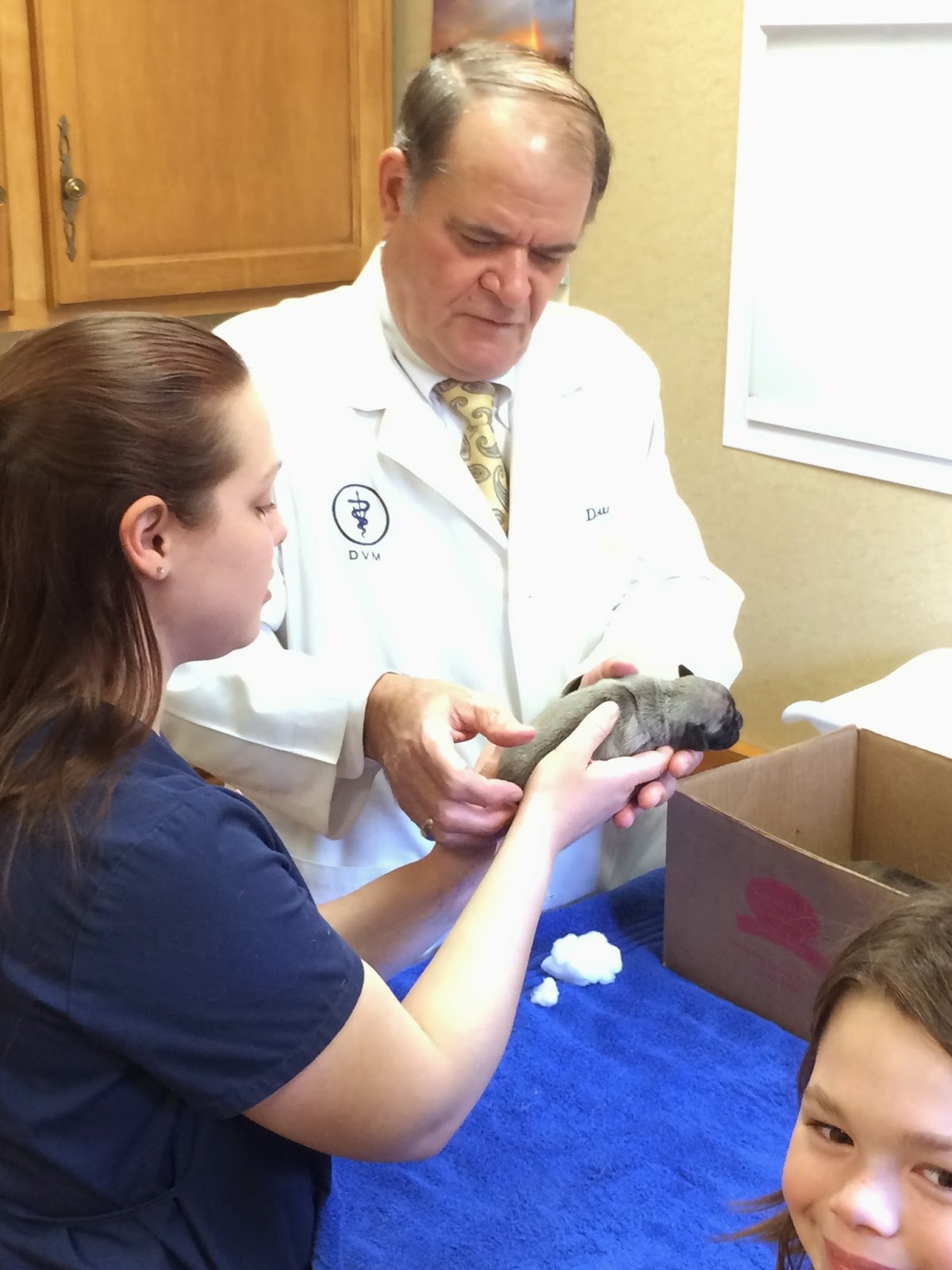
Pookie is a two year old Pug who visited us at Companion Pet Hospital of Fishkill with her five male puppies. Dr. Ouart examined the puppies along with Lauren, Mellisa, and our Technician Assistant Natalee (Kathy's daughter).


Tuesday, April 8, 2014

April is National Heartworm Awareness Month!

April is National Heartworm Awareness Month! Did you know that heartworm disease is one of the most deadly diseases in pets? It is 100% preventable so call us today and ask about your pet’s heartworm prevention.

Tuesday, February 4, 2014

Laser Therapy: Micki

Here is Micki an 11 year old pug wearing her "doggles" right before she received laser light therapy. 

The beneficial effects of laser light on tissue were first recognized almost forty years ago. Since then, there have been thousands of studies documenting the positive effects laser light has on different types of cells, tissue, and disorders.  Recent advances in technology and manufacturing have made it possible to have this exciting modality available and affordable for clinicians.


The laser light is delivered through a non-invasive handpiece to treat the affected area. Your pet will feel a gentle and soothing warmth. As the laser is administered, many pets will relax, much like you would experiencing a good massage. The almost immediate relief of pain will allow your pet to be comfortable and any anxiety that your pet initially experienced will dissipate.


Simply put, it provides relief. The fur does not need to be clipped. Eye protection will be worn by the laser operator and anyone in a close proximity to the laser probe.  The eyes of the animal will be directed away from the treatment area or covered with a towel or eye wear.  The clinician will move the probe over the area of treatment to assure the laser is being delivered to the area which needs improvement.  There are no known side effects with this treatment.

Tuesday, September 17, 2013

Pet Diabetes


What is diabetes?

Diabetes mellitus, the medical name for diabetes, is a disease caused by a lack of insulin, or the inability of the body to utilize the insulin properly, that affects the level of glucose, or sugar, in your dog or cat’s blood. The glucose comes from the food that your pet eats. The food is broken down into very small components by the pet’s digestive system so their bodies can use it for energy. Glucose is one of these components, and an important source of energy.
Glucose is absorbed from the intestines into the bloodstream where it travels to cells throughout the body. Insulin is required for the cells to absorb glucose. Insulin is produced by the pancreas in response to the amount of glucose in the bloodstream. Healthy pets produce insulin easily, but pets with diabetes don’t. In canine and feline diabetes, unused glucose builds up in the bloodstream.

Is diabetes in my pet the same as diabetes in people?

The two conditions are very similar. In fact, your veterinarian will be using medication, equipment, and monitoring systems that are similar to those used for diabetic people.

How common is diabetes in dogs and cats?

Diabetes usually affects less than 1% of dogs and cats. But experts believe that it is on the rise.

Can diabetes lead to other health problems?

Yes. Dogs and cats with diabetes can develop other health problems, usually after living with diabetes for a year or more. For dogs, a common complication of diabetes is cataract formation. Persistently high blood glucose levels can make the lens of the eye opaque, causing blindness. For cats, weakness of the hind legs is a common complication. Persistently high blood glucose levels may damage nerves, causing weakness and muscle wasting. For both dogs and cats, controlling high blood glucose levels can lead to healthier outcomes. For this reason, early diagnosis of diabetes in your dog or cat is important.

Will diabetes affect my dog or cat’s life expectancy?

Today, with effective treatment and monitoring, a diabetic dog or cat should have the same life expectancy as a non-diabetic dog or cat of the same age. Early diagnosis and appropriate treatment helps diabetic pets maintain a good quality of life.

Is my dog or cat at risk for diabetes?

While diabetes has been diagnosed in dogs and cats of all ages, genders, and breeds, certain pets are at greater risk for the disease.

Risk factors in dogs

  • Age (middle-aged to older dogs are more affected)
  • Unspayed females
  • Genetics
  • Obesity

Breed—these breeds have a higher risk for developing diabetes:

  • Cocker Spaniels
  • Dachshunds
  • Doberman Pinschers
  • German Shepherds
  • Golden Retrievers
  • Labrador Retrievers
  • Pomeranians
  • Terriers
  • Toy Poodles

Risk factors in cats

  • Age (older cats are more susceptible)
  • Neutered males
  • Genetics
  • Other insulin-resistant disorders or diseases, such as chronic pancreatitis (inflammation of the pancreas) or hyperthyroidism (overproduction of thyroid hormones)
  • Obesity
  • Physical inactivity
  • Indoor lifestyle

Are there warning signs I should be aware of?

Some common signs of diabetes in dogs and cats include:
  • Excessive thirst
  • Excessive urination—your pet produces more urine per day or has “accidents” in the house (dogs) or outside the litterbox (cats)
  • Excessive hunger while losing weight
  • Lethargy (less active/sleeps more)
  • Cloudy eyes (dogs)
  • Doesn’t groom (cats)
  • Thinning, dry, and dull hair

How will my veterinarian test my pet for diabetes?

Your veterinarian may begin by performing a general health examination and asking questions about any signs your pet may be displaying. Then, a sample of your pet’s urine will be tested for the presence of glucose (a type of sugar) or ketones (acids produced by the body as it breaks down fat instead of glucose for energy). If glucose is present in your pet’s urine, your veterinarian will then test your pet’s blood to determine the blood glucose level. A diabetes diagnosis is considered definite when persistently high glucose levels are found in both the blood and urine.

How do I take care of a pet with diabetes?

Although there is no cure for diabetes, the disease can be successfully managed with the help of your veterinarian. Daily insulin injections are usually required to restore a pet’s insulin level and control blood glucose levels. Many owners are anxious about giving injections, but it’s easier than you think, and you can quickly learn how to handle the dosing routine with little stress for you or your pet. Diet plays a vital role in helping to keep your pet’s diabetes regulated.
Your veterinarian can recommend a diet that’s best suited to the needs of your pet. A high-quality, consistent source of protein is an essential part of any diabetic diet. High-protein, low-carbohydrate foods are currently recommended for diabetic cats because they provide the extra energy cats need to get through their active days, without the extra carbs that can turn into excess sugar. It is important to feed your pet based on its ideal body weight.
Consistent timing and size of meals is also very important. Exercise can help dogs with diabetes, but it needs to be regulated because activity affects blood glucose levels. It’s best to create a consistent exercise routine for your diabetic dog and stick to it. (There is no clear recommendation for exercise in diabetic cats because their activity is difficult to regulate.) Regular veterinary checkups can help identify changes in your pet’s condition and help you to manage this disease successfully over time.
Managing your dog or cat’s diabetes will require some effort, but the rewards are well worth it. Pets whose diabetes is under control have normal thirst, appetite, urination, and activity levels. Their weight is generally stable and they are less likely to develop complications.

Where can I learn more about diabetes in dogs and cats?

The following websites provide useful information:


Originally posted on Healthy Pet.

Tuesday, August 13, 2013

Make Sure They Can Get Home: Check Your Pet's Microchip

Is your pet's microchip up-to-date? If your pet were lost, would an animal hospital or shelter be able to contact you once your pet was found?


It's important to get your pet microchipped; but it's just as important to make sure that microchip contains the correct information in order for your four-legged friend to get home.
That's why the American Animal Hospital Association (AAHA) and the American Veterinary Medical Association (AVMA) are teaming up to encourage pet owners to update their pet's microchip information on National Check the Chip Day, Aug. 15.
Almost 9.6 million pets are euthanized every year because their owners can't be found, according to the American Humane Association. While tags and collars are important, microchipping is a valuable method because the microchip won't wear out, tear, slip off or become lost.
How does a microchip work?
The microchip, which is about the size of a grain of rice, is injected by a veterinarian or veterinary technician just beneath your pet's skin in the area between the shoulder blades. This is usually done without anesthesia, and the experience can be compared to getting a vaccination.
Each microchip has a unique registration number that is entered into a database or registry, and is associated with your name and contact information. If your lost dog or cat is found by an animal hospital, shelter or humane society, they will use a microchip scanner to read the number and contact the registry to get your information.
Make sure you can be found, too
While it may be comforting to know the microchip won't get lost or damaged, and that it will probably last the pet's lifetime, the microchip is useless if you're not updating your contact information with the registry. If your pet has been microchipped, keep the documentation paperwork so you can find the contact information for the registry. If you don't have the documentation paperwork, contact the veterinarian or shelter where the chip was implanted.
Keep in mind there are more than a dozen companies that maintain databases of chip ID numbers in the U.S. By using AAHA's Universal Pet Microchip Lookup at petmicrochiplookup.org, you can locate the registry for your chip by entering the microchip ID number. If you don't have your pet's microchip ID number, have a veterinarian scan it and give it to you.
Only about 17% of lost dogs and 2% of lost cats ever find their way back to their owners. Prevent the heartache and ensure your pet has an up-to-date microchip.


Originally published by Healthy Pet.

Tuesday, July 9, 2013

Dog House Repairs Month

Does your dog have a dog house? It's Dog House Repairs Month! Make sure their house is not made of pressure treated wood if they are a puppy or a chewer! Pressure treated wood is treated with arsenic and is poisonous to pets if consumed!

Monday, June 3, 2013

Pet Preparedness Month

Do you have a preparedness kit for your pet, in case of an emergency? We recommend including food, water, leash and collar, bowls, pet ID, medications, immunization records, pet carrier, first aid kit, and a contact list for all pet emergency contacts.

Friday, May 24, 2013

Memorial Day


Monday is Memorial Day, a time to remember the men and women who dedicated their lives to our nation’s freedom.

Wednesday, February 13, 2013

Pets a Go Go: Tips for Traveling with Fido and Fluffy


Traveling with your pet can be a rewarding experience, but a successful trip depends on more than packing your pet’s favorite tennis ball or catnip toy.
To ensure the safety and happiness of your pet, start planning early, research transportation and lodging options, and make an appointment with your veterinarian.

Jet Setters

Most major airlines transport animals, but before booking a flight, consider all the factors, including your pet’s size and temperament and possible weather conditions.
Pets that are too large to fit in a pet carrier under your seat must fly as checked baggage in the plane’s cargo section.
Many animals become anxious in unfamiliar environments, particularly when separated from their owners, and can suffer both emotionally and physically during a flight.
Sedation is not considered a safe option.
"An animal’s natural ability to balance and maintain equilibrium is altered under sedation," says Patricia Olson, DVM, of the Morris Animal Foundation. "When the kennel is moved, a sedated animal may not be able to brace and prevent injury.”
Gary L. Rose, DVM, of AAHA-accredited Cabrillo Veterinary Hospital in San Diego, Calif., adds “When heavily sedated, some short-nosed breeds can have trouble breathing.”
Temperature extremes can also put your pet at risk. Many airlines do not transport pets during the hottest months of the year, or will not accept pets when the forecasted temperature is above a certain point.
Look for flights in the early morning or late evening, when temperatures are at their lowest.

On the Road

Of course there are also safety concerns when traveling by car. Pet crates are strongly recommended.
If an accident occurs, pet crates can protect animals from impact injuries and also prevent them from running out into traffic.
Marci Cook, DVM, of AAHA-accredited Shiloh Veterinary Hospital in Billings, Mont., says, “A crate offers a safe environment for your pet and helps them to feel comfortable.”
Rose recommends introducing your pet to the crate over several weeks. “Get them used to it by feeding them in it, and by taking short trips around the neighborhood to see how they do.”
For pets prone to motion sickness, Rose advises, “Make sure there’s adequate ventilation in the car. Keep [it] cool and comfortable. If your pet still shows signs of motion sickness, medication is available through your veterinarian.”

Lodging

Always research accommodations before leaving home, and make reservations whenever possible.
Many hotels and inns allow pets but may have size and weight limits, breed restrictions, or a limit on the number of pets allowed per room.
Campgrounds also have pet policies and occasionally prohibit pets altogether. State and national parks that allow pets often restrict them from certain areas, such as hiking trails and beaches.

Health Certificates

Most airlines require pets be examined by a veterinarian no more than 10 days prior to the date of travel. Be prepared to present health and rabies certificates at the time of departure.
If you are traveling by car, pack a copy of your pet’s prescriptions and vaccination records. Some states require proof of rabies vaccination.
Your veterinarian can also tell you if your pet needs additional vaccinations or preventive medications for the area in which you will be traveling.

Travel Tips and Car Safety

  • Be sure your pet is wearing a flat collar with identification tags at all times.
  • If your pet doesn’t have a microchip, consider having one implanted.
  • Know basic pet first aid, and carry a first aid kit.
  • Never allow your pet to travel with its head outside the car window.
  • Do not allow pets to ride in the front seat. They are at risk of being thrown into the windshield, can interfere with your ability to drive, or could be injured by an airbag.
  • Disable electric window controls. Dogs have have been know to get their heads stuck in windows after stepping on the buttons.
  • Stop for “potty breaks” every two hours.
  • Always leash your pet before opening the car door.

Originally published on Healthy Pet

Tuesday, February 12, 2013

February is Dog Training Education Month!

February is Dog Training Education Month! Do you have a dog that could use a little more training? Now is the time to some research to learn a little more about how your mind works and perhaps learn a few things about how you can better train your pet!


Friday, January 11, 2013

Outdoor Pets and Shelter

Pets that live outside have a significantly shorter lifespan than pets that live their lives in comfort and warmth.
We recommend that all pets have the opportunity to live inside the house, but if that’s not possible, it’s important to offer your pet a nice warm place for them to seek shelter, plenty of blankets or straw for nesting, and endless fresh, unfrozen water for drinking. If you have questions, we’ll be glad to help.

Friday, December 14, 2012

Candy/Chocolate Dangers for Pets

There are lots of holiday dangers that could affect your pet, so it’s important to be aware! We recommend keeping all candy, chocolate, and other sugary sweets out of your pet’s reach at all times, because ingestion of these edibles can seriously injure your pet! Please contact us if you have questions.


Monday, October 22, 2012

Black Cat Safety


We would like to remind you to keep your black cat in a safe place at home this year on Halloween, because these poor, innocent creatures have often been targeted negatively on this holiday. In order to ensure your pet’s safety, we recommend keeping them inside until the holiday is over. We’ll be happy to answer any questions you may have about this precaution!

Friday, August 17, 2012

Happy Birthday Melissa

Happy Birthday Melissa, Licensed Veterinary Technician! We hope you have a PAWSome birthday today! Thank you for all that you do for the pets that visit Companion Pet Hospital of Fishkill!


Wednesday, August 15, 2012

Good Luck

We would like to wish the best of luck to Lauren and Robbyn who are Tech Assistants who are going back to school to finish their degree!

Tuesday, August 14, 2012

Ticks & Lyme Disease

What Are Ticks? Ticks are external parasites that feed on the blood of unlucky host animals such as our canine companions. Like mites and spiders, ticks are arachnids. The brown dog tick (Rhipicephalus sanguineus) and the American dog tick (Dermacentor variabilis), examples of ticks that commonly affect dogs, require three feedings to complete their life cycles.

How Are Ticks Transmitted to Dogs?
Ticks are most active in from spring through fall and live in tall brush or grass, where they may attach to dogs playing on their turf. These parasites prefer to stay close to the head, neck, feet and ear area. In severe infestations, however, they can be found anywhere on a dog’s body.

How Do I Know if My Dog Has Ticks?
Ticks are visible to the naked eye. During the warmer months, it’s a good idea to check your dog regularly for these parasites. If you do spot a tick, it is important to take care when removing it. Any contact with the tick’s blood can potentially transmit infection to your dog or even to you! Treat the area with rubbing alcohol and pluck the parasite with tweezers, making sure you’ve gotten the biting head and other body parts. Since it may only take a few hours for disease to be transmitted from an attached tick, it is ideal for your dog to be evaluated by a veterinarian soon after any ticks are found.

Are Certain Dogs Prone to Ticks?
Ticks can be found all over the world. But dogs who live in warm climates and certain wooded areas of the Northeast, where ticks are particularly prominent, might be more prone due to increased exposure.

What Are Some Complications Associated with Ticks in Dogs? 
  • Blood loss
  • Anemia
  • Tick paralysis
  • Skin irritation or infection
Ticks can also transmit diseases such as Lyme disease, ehrlichiosis and Rocky Mountain spotted fever, all of which can cause serious complications and are potentially fatal without prompt and proper treatment.

My Dog Has Been Bitten by a Tick! What Should I Do?
Remove the tick, as noted above, and consult with your veterinarian, who will help you to prevent future infestation. Your vet may also perform blood tests to rule out diseases transmitted by ticks.

What Is Lyme Disease?
Lyme disease is a bacterial infection that can affect humans, dogs, cats and other mammals. Its primary carrier is the deer tick (Ixodes scapularis), which often feeds on rodents in its early stages. Later, the tick can attach to a dog or human and transmit the bacteria that cause Lyme disease. Clinical signs include depression, swelling of the lymph nodes, loss of appetite and fever, as well as lameness and swollen, painful joints. Renal failure can also be a consequence of Lyme disease.

What Should I Do If I Think My Dog Has Lyme Disease? Bring your pet to a veterinarian, who will evaluate your dog for Lyme disease. This includes a physical exam, blood tests and possibly radiographs.

How Is Lyme Disease Treated?
Your veterinarian can best determine the optimal treatment plan for your dog. Canine Lyme disease is most often effectively treated with antibiotics. With prompt, proper treatment, your dog’s condition should start to improve within 48 hours.

How Can I Prevent Tick Infestation? Many of the same products on the market that treat fleas also kill ticks and protect against future infestation. These topical treatments are especially recommended for those dogs who live in areas with high tick populations. Speak to your vet to select the best product for your dog.

The key to any successful tick control program lies, literally, in your own backyard. Ensure a tick-free lawn by mowing it regularly, removing tall weeds and making it inhospitable to rodents by keeping garbage covered and inaccessible.


http://www.aspca.org/pet-care/dog-care/dog-care-ticks-lyme-disease.aspx

Friday, August 10, 2012

Pets & Over-the-Counter Medications

We may feel like our pets are human sometimes, but we have to always remember that they cannot eat some of the same foods or take the same medicines as us. It’s important to always keep your medications—from potent prescription medicines to basic pain killers like Tylenol and cough drops—out of your pet’s reach at all times.