Wednesday, April 16, 2014

Pookie's Puppies

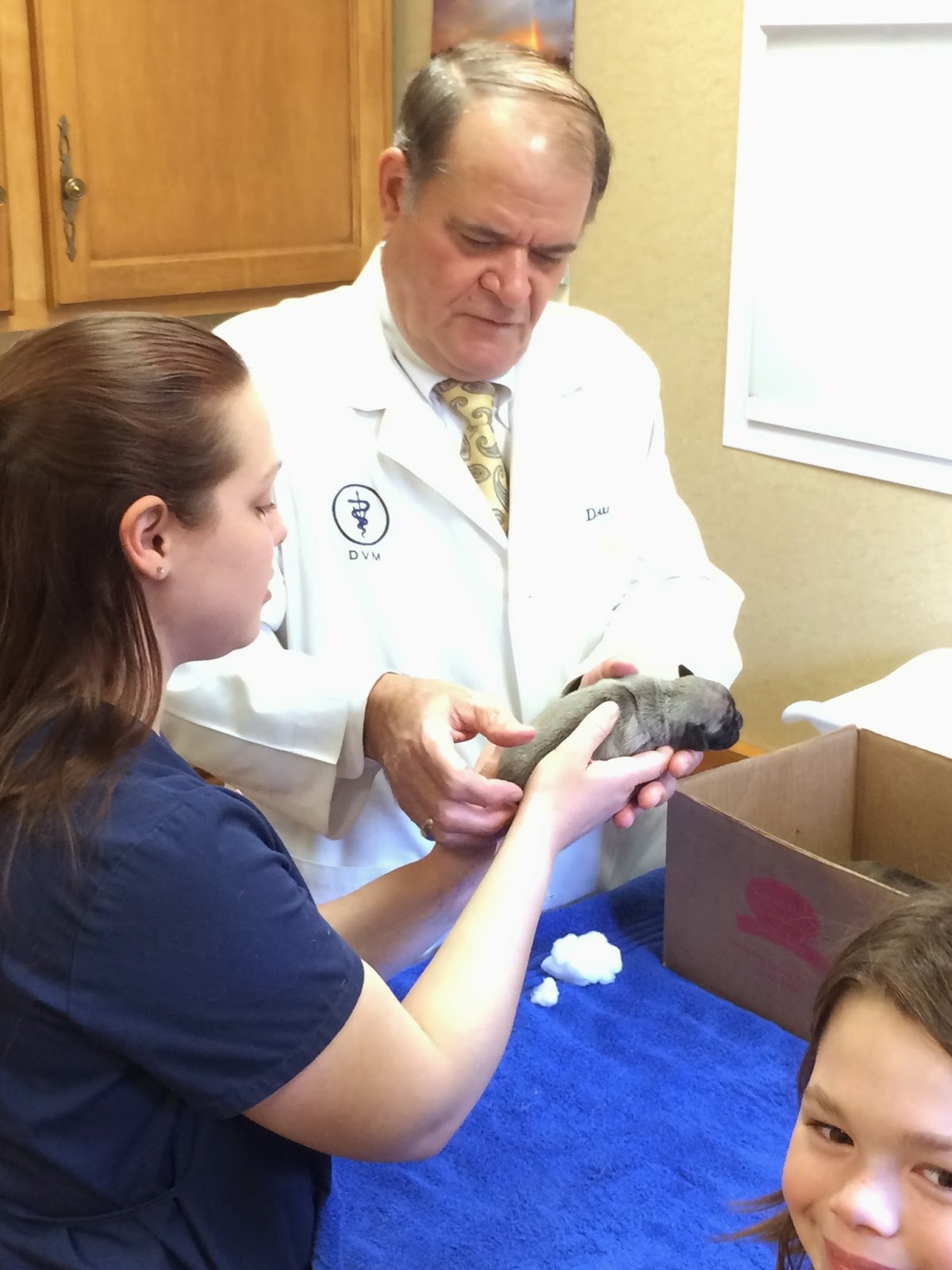
Pookie is a two year old Pug who visited us at Companion Pet Hospital of Fishkill with her five male puppies. Dr. Ouart examined the puppies along with Lauren, Mellisa, and our Technician Assistant Natalee (Kathy's daughter).


Tuesday, April 8, 2014

April is National Heartworm Awareness Month!

April is National Heartworm Awareness Month! Did you know that heartworm disease is one of the most deadly diseases in pets? It is 100% preventable so call us today and ask about your pet’s heartworm prevention.

Friday, April 4, 2014

Top 10 Green Pet Tips


  1. Adopt from a shelter
    Why buy when you can adopt one of the 70,000 puppies and kittens born every day in the United States?

  1. Spay or neuter your pet
    Spaying and neutering helps dogs and cats live longer, healthier lives by eliminating the possibility of uterine, ovarian, and testicular cancer and decreasing the incidence of prostate disease.

  1. Rein in your pets; protect native wildlife
    Always keep your dog on a leash when outside and confine your mangy feline indoors.

  1. Swap out the junk food
    Most conventional pet-food brands you find at the supermarket consist of reconstituted animal by-products, otherwise known as low-grade wastes from the beef and poultry industries. Natural and organic pet foods use meats that are raised in sustainable, humane ways without added drugs or hormones, minimally processed, and preserved with natural substances, such as vitamins C and E.

  1. Clean up their poop
    Scoop up your doggie doo in biodegradable poop bags so your buddy's No. 2 isn't immortalized in a plastic bag while deep-sixed in a landfill somewhere for hundreds of years. Cat owners should avoid clumping clay litter at all costs. Not only is clay strip-mined (bad for the planet), but the clay sediment is also permeated with carcinogenic silica dust that can coat little kitty lungs (bad for the cat).

  1. Give them sustainable goods Your furry friends can get in on some saving-the-planet goodness, too--and have plenty of fun--with toys made from recycled materials or sustainable fibers (sans herbicides or pesticides) such as hemp.

  1. Use natural pet-care and cleaning products
    You don't use toxic-chemical-laced
    shampoos and beauty products, so lather up your cats and dogs (or ferrets, rabbits, or hamsters--we don't judge) with natural pet-care products, as well. And if your cat horks up a hairball, or Fifi doesn't make it all the way to the bathroom, clean up the mess with cleaning products that are as gentle on the planet as they are on your critters' delicate senses.

  1. Tag your pet
    It might be a stretch to call inserting an electronic ID chip into your pet an eco-friendly move, but losing your buddy causes extreme emotional distress that turns you into nobody's friend. Then there's the paper waste from printing out Missing posters, the fuel cost of driving around your neighborhood trying to find them, the phone bill as you bawl your eyes out to everyone you know ... well, you get the idea. Ask us for more info.
  2. Compost their poopAmerican dogs and cats create 10 million tons of waste a year, and no one knows where it's going, according to Will Brinton, a scientist in Mount Vernon, Maine, and one of the world's leading authorities on waste reduction and composting.

  1. Get crafty
    Your cat will love you forever if you grow your own organic catnip or cat grass. Scrap yarn and fabric you might otherwise toss can also easily be transformed into pet toys with some basic crafty know-how. And they wouldn't have had to be trucked thousands of miles just to get drooled on.


Tuesday, February 4, 2014

Laser Therapy: Micki

Here is Micki an 11 year old pug wearing her "doggles" right before she received laser light therapy. 

The beneficial effects of laser light on tissue were first recognized almost forty years ago. Since then, there have been thousands of studies documenting the positive effects laser light has on different types of cells, tissue, and disorders.  Recent advances in technology and manufacturing have made it possible to have this exciting modality available and affordable for clinicians.


The laser light is delivered through a non-invasive handpiece to treat the affected area. Your pet will feel a gentle and soothing warmth. As the laser is administered, many pets will relax, much like you would experiencing a good massage. The almost immediate relief of pain will allow your pet to be comfortable and any anxiety that your pet initially experienced will dissipate.


Simply put, it provides relief. The fur does not need to be clipped. Eye protection will be worn by the laser operator and anyone in a close proximity to the laser probe.  The eyes of the animal will be directed away from the treatment area or covered with a towel or eye wear.  The clinician will move the probe over the area of treatment to assure the laser is being delivered to the area which needs improvement.  There are no known side effects with this treatment.

Thursday, December 12, 2013

Christmas Safety


“My pet would never eat food off the table!”

“My pet would never knock over the Christmas tree!”

“My pet would never bite someone!”

We all know our pets pretty well, but what we don’t always realize is that stress can make anybody do crazy things! When you have holiday guests or flashing Christmas lights or loud holiday music—or all of the above—at your house all at once, your pet may get stressed and frustrated, causing them to act out in unexpected ways. Most pet accidents are met with the statement, “He’s never done anything like that before!”

We recommend always making sure that your pet has a safe place to sit and relax during your holidays parties. Just like some people, pets need to get away from the action and de-stress, but most of the time they don’t know how to ask for their space. If your pet is comfortable in their crate, we recommend moving it into a quiet room and letting them spend some time resting during your holiday get-togethers. Your pet will be happier, and by extension, you and your guests will be happier! And holidays disasters will be prevented.  


Tuesday, November 5, 2013

It’s Adopt A Senior Pet Month!

Senior pets need love just as much as young and spry pets do. Have you ever adopted a senior pet and how has it changed your life?

Tuesday, September 17, 2013

Pet Diabetes


What is diabetes?

Diabetes mellitus, the medical name for diabetes, is a disease caused by a lack of insulin, or the inability of the body to utilize the insulin properly, that affects the level of glucose, or sugar, in your dog or cat’s blood. The glucose comes from the food that your pet eats. The food is broken down into very small components by the pet’s digestive system so their bodies can use it for energy. Glucose is one of these components, and an important source of energy.
Glucose is absorbed from the intestines into the bloodstream where it travels to cells throughout the body. Insulin is required for the cells to absorb glucose. Insulin is produced by the pancreas in response to the amount of glucose in the bloodstream. Healthy pets produce insulin easily, but pets with diabetes don’t. In canine and feline diabetes, unused glucose builds up in the bloodstream.

Is diabetes in my pet the same as diabetes in people?

The two conditions are very similar. In fact, your veterinarian will be using medication, equipment, and monitoring systems that are similar to those used for diabetic people.

How common is diabetes in dogs and cats?

Diabetes usually affects less than 1% of dogs and cats. But experts believe that it is on the rise.

Can diabetes lead to other health problems?

Yes. Dogs and cats with diabetes can develop other health problems, usually after living with diabetes for a year or more. For dogs, a common complication of diabetes is cataract formation. Persistently high blood glucose levels can make the lens of the eye opaque, causing blindness. For cats, weakness of the hind legs is a common complication. Persistently high blood glucose levels may damage nerves, causing weakness and muscle wasting. For both dogs and cats, controlling high blood glucose levels can lead to healthier outcomes. For this reason, early diagnosis of diabetes in your dog or cat is important.

Will diabetes affect my dog or cat’s life expectancy?

Today, with effective treatment and monitoring, a diabetic dog or cat should have the same life expectancy as a non-diabetic dog or cat of the same age. Early diagnosis and appropriate treatment helps diabetic pets maintain a good quality of life.

Is my dog or cat at risk for diabetes?

While diabetes has been diagnosed in dogs and cats of all ages, genders, and breeds, certain pets are at greater risk for the disease.

Risk factors in dogs

  • Age (middle-aged to older dogs are more affected)
  • Unspayed females
  • Genetics
  • Obesity

Breed—these breeds have a higher risk for developing diabetes:

  • Cocker Spaniels
  • Dachshunds
  • Doberman Pinschers
  • German Shepherds
  • Golden Retrievers
  • Labrador Retrievers
  • Pomeranians
  • Terriers
  • Toy Poodles

Risk factors in cats

  • Age (older cats are more susceptible)
  • Neutered males
  • Genetics
  • Other insulin-resistant disorders or diseases, such as chronic pancreatitis (inflammation of the pancreas) or hyperthyroidism (overproduction of thyroid hormones)
  • Obesity
  • Physical inactivity
  • Indoor lifestyle

Are there warning signs I should be aware of?

Some common signs of diabetes in dogs and cats include:
  • Excessive thirst
  • Excessive urination—your pet produces more urine per day or has “accidents” in the house (dogs) or outside the litterbox (cats)
  • Excessive hunger while losing weight
  • Lethargy (less active/sleeps more)
  • Cloudy eyes (dogs)
  • Doesn’t groom (cats)
  • Thinning, dry, and dull hair

How will my veterinarian test my pet for diabetes?

Your veterinarian may begin by performing a general health examination and asking questions about any signs your pet may be displaying. Then, a sample of your pet’s urine will be tested for the presence of glucose (a type of sugar) or ketones (acids produced by the body as it breaks down fat instead of glucose for energy). If glucose is present in your pet’s urine, your veterinarian will then test your pet’s blood to determine the blood glucose level. A diabetes diagnosis is considered definite when persistently high glucose levels are found in both the blood and urine.

How do I take care of a pet with diabetes?

Although there is no cure for diabetes, the disease can be successfully managed with the help of your veterinarian. Daily insulin injections are usually required to restore a pet’s insulin level and control blood glucose levels. Many owners are anxious about giving injections, but it’s easier than you think, and you can quickly learn how to handle the dosing routine with little stress for you or your pet. Diet plays a vital role in helping to keep your pet’s diabetes regulated.
Your veterinarian can recommend a diet that’s best suited to the needs of your pet. A high-quality, consistent source of protein is an essential part of any diabetic diet. High-protein, low-carbohydrate foods are currently recommended for diabetic cats because they provide the extra energy cats need to get through their active days, without the extra carbs that can turn into excess sugar. It is important to feed your pet based on its ideal body weight.
Consistent timing and size of meals is also very important. Exercise can help dogs with diabetes, but it needs to be regulated because activity affects blood glucose levels. It’s best to create a consistent exercise routine for your diabetic dog and stick to it. (There is no clear recommendation for exercise in diabetic cats because their activity is difficult to regulate.) Regular veterinary checkups can help identify changes in your pet’s condition and help you to manage this disease successfully over time.
Managing your dog or cat’s diabetes will require some effort, but the rewards are well worth it. Pets whose diabetes is under control have normal thirst, appetite, urination, and activity levels. Their weight is generally stable and they are less likely to develop complications.

Where can I learn more about diabetes in dogs and cats?

The following websites provide useful information:

Originally posted on Healthy Pet.